
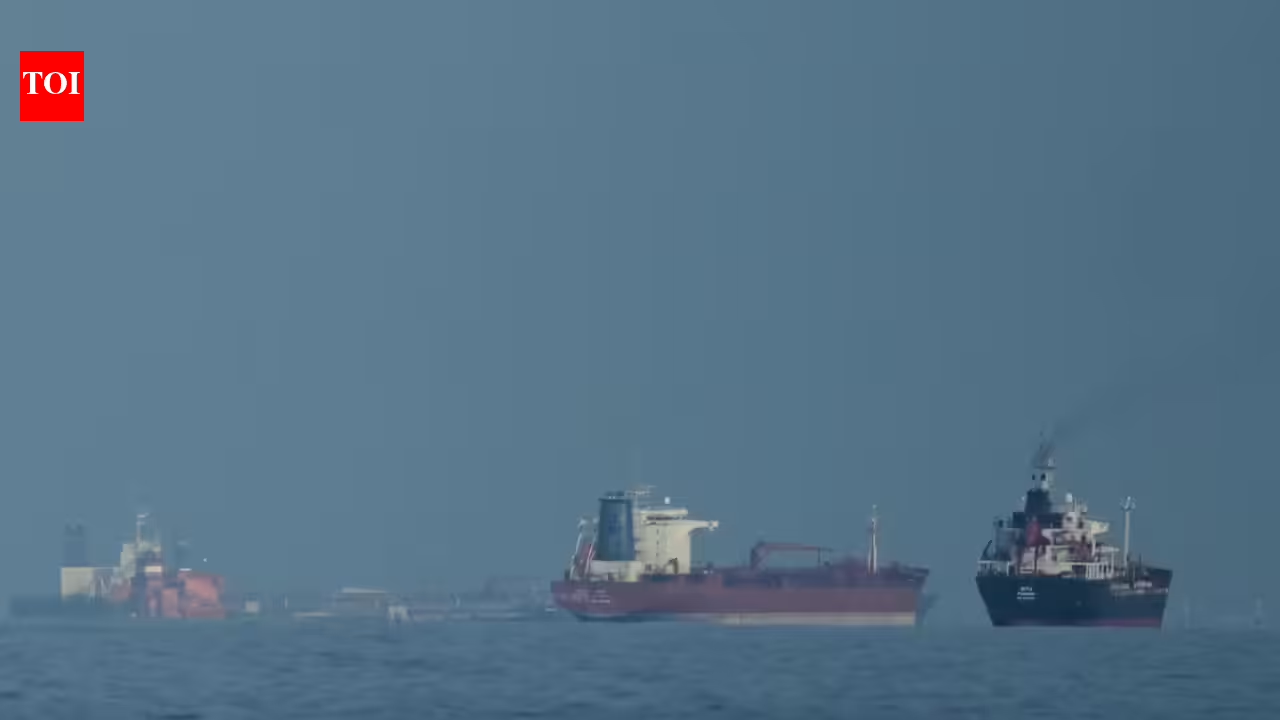
In a significant geopolitical development, Iran has announced that it will continue to allow select “friendly nations” to transit through the strategically vital Strait of Hormuz, despite escalating military tensions in the Middle East. Among the countries granted access are India, Pakistan, and three other unnamed nations, signaling Tehran’s effort to maintain key diplomatic and economic relationships even during conflict.
Strategic Importance of the Strait of Hormuz
The Strait of Hormuz is one of the world’s most critical maritime chokepoints, handling nearly a fifth of global oil and gas trade. Any disruption in this narrow passage between the Persian Gulf and the Gulf of Oman can have far-reaching consequences for global energy markets. Iran’s decision to restrict access while still permitting “friendly nations” highlights the delicate balance between military strategy and economic necessity.
By allowing selective transit, Iran appears to be leveraging its geographical advantage while avoiding a complete blockade that could trigger severe international backlash.

India’s Energy Security Gets a Boost
For India, access to the Strait comes at a crucial time. According to a report by Bloomberg, New Delhi has recently purchased its first LPG cargo from Iran since 2018. This marks a notable shift in India-Iran energy ties, which had been largely dormant due to sanctions imposed by Western countries in 2019.
The resumption of LPG imports indicates a potential recalibration of India’s energy sourcing strategy, especially as global fuel prices remain volatile. Iran, with its vast hydrocarbon reserves, offers a cost-effective and geographically favorable option for India.

Sanctions and the Changing Geopolitical Landscape
India had halted oil and gas imports from Iran following the reimposition of U.S. sanctions in 2019. These sanctions significantly curtailed Tehran’s ability to export energy, forcing countries like India to seek alternative suppliers such as Saudi Arabia and the United States.
However, the current geopolitical climate appears to be shifting. The reported LPG deal and Iran’s willingness to allow transit suggest that both nations are exploring ways to revive economic cooperation, possibly within the constraints of evolving international regulations.

A Calculated Diplomatic Move
Iran’s decision to label certain countries as “friendly” and grant them passage is widely seen as a calculated diplomatic move. By maintaining trade routes with select partners, Tehran can sustain a level of economic activity while reinforcing alliances in Asia.
For India, this development is not just about energy imports but also about maintaining strategic autonomy in foreign policy. Access to Iranian resources and trade routes strengthens India’s position as a major player in regional and global energy markets.

What Lies Ahead?
While the situation remains fluid, Iran’s selective opening of the Strait of Hormuz could have broader implications for global trade and diplomacy. If tensions escalate further, the security of the route could still be at risk. However, for now, countries like India stand to benefit from continued access and renewed trade opportunities.
In the coming weeks, global observers will closely watch how this policy evolves and whether it leads to a more sustained thaw in Iran’s economic relations with key partners.